Garuda Wisnu Kencana Visitor Guide
Jump to what you need
🕒 Where and when to go
🗓️ How much time do you need?
🎟️ Which ticket is right for you?
🗺️ Getting around
🗿 What to see
♿ Facilities and accessibility
Where and when to go
How do you get to Garuda Wisnu Kencana?
Which entrance should you use?
When is Garuda Wisnu Kencana open?
How much time do you need?
| Visit type | Route | Duration | Walking distance | What you get |
|---|---|---|---|---|
Highlights only | Entrance → main statue plaza → Lotus Pond → one short performance stop → exit | 2–2.5 hrs | ~2 km | You get the headline monument, the main photo angles, and a quick cultural taste, but you’ll likely skip Indraloka Garden, Tirta Agung, and any slower sunset pacing. |
Balanced visit | Entrance → main statue plaza → Lotus Pond → Tirta Agung → Street Theater show → Indraloka Garden → exit | 3–4 hrs | ~3.5 km | This adds the quieter spiritual and garden areas, plus enough time for one full show, which is what makes the park feel like more than a statue stop. |
Full exploration | Entrance → main statue plaza → Lotus Pond → Tirta Agung → Indraloka Garden → full dance performance → meal break → statue interior tour if included → exit | 4.5–6 hrs | ~5 km | You get the full cultural-park rhythm, better light for photos, and time to slow down, but the length and heat can feel draining if you try to do it all at midday. |
Select your experience
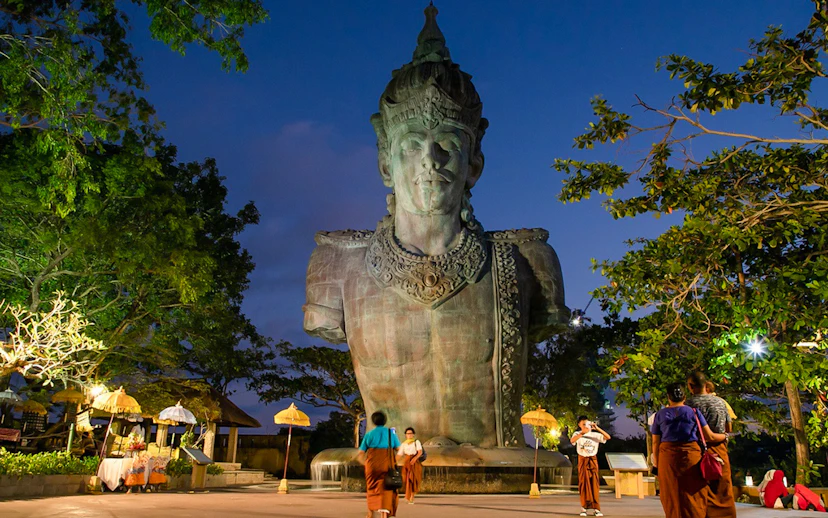
Cultural park entry with live Balinese shows, art exhibits & optional costume photoshoot
- Everything you get: Enter GWK Cultural Park and explore its open-air plazas while watching scheduled Balinese dance performances. Your visit includes, starting 1 Sep 2026, a complimentary dessert for every dine-in or takeout order at Jendela Bali Restaurant and entry to the Garuda Sineloka Mini Theater to watch Petualangan Garuda Cilik.
- Why choose this: Combines park entry, live performances, and cultural attractions in one ticket, with art or costume upgrades available.
- Upgrades: Add Asana Artseum access to explore immersive galleries, 1-free entry ticket, or upgrade to a traditional costume photoshoot with styling and edited photos, or upgrade to include entry to the Baraong performance at the Amphitheater (6pm to 6:30pm).
Inclusions #
Entry to GWK Cultural Park
Access to scheduled cultural performances during your visit
Access to Petualangan Garuda Cilik at Garuda Sineloka Mini Theater (hourly from 10:30am to 7:30pm)
Starting 1 Sep 2026, refreshing drinks at Jendela Bali Restaurant are replaced with a complimentary dessert for every dine-in or takeout order
Entry to Asana Artseum (based on option selected)
Premium access to Asana Artseum (based on option selected)
1 set Balinese, Javanese, or Payas Alit costume (based on option selected)
Accessories and hair styling for women (based on option selected)
Special background setting (based on option selected)
1, 3, or 5 high-quality edited photos (based on option selected)
1 complimentary GWK Cultural Park admission ticket (based on option selected)
1-free entry ticket (as per option selected)
Entry to the Baraong performance at the Amphitheater (6pm to 6:30pm)(based on option selected)
Exclusions #
- Personal expenses
What to bring
- Weather can be sunny and bright, and occasional rain may occur. Guests are encouraged to bring a hat, umbrella, or sun and rain protection for comfort.
Accessibility
- This activity is wheelchair-accessible.
Additional information
- GWK Cultural Park is an open-air cultural destination with attractions and performances scheduled at regular times.
- Most visitors spend approximately 2–3 hours exploring the park.
- This ticket is valid only on the selected date and allows one-time entry.
Daily performances Amphitheater
- Tari Sekar Jepun, Tari Kebyar Duduk, Topeng Kenyum Manis: 11am
- Tari Jauk Keras, Tari Oleg Tamulilingan, Tari Kebyar Duduk: 12pm
- Tari Sekar Jepun, Tari Jauk Manis: 1pm
- Tari Topeng Monyer, Tari Jauk Manis: 2pm
- Tari Oleg Tamulilingan, Tari Barong-Bojog: 3pm
Plaza Wisnu
- Parade Budaya Bali: 4pm
Lotus Pond
- Joged Bumbung: 5pm
- KECAK – Garuda Wisnu Kencana: 6pm
- These tickets can't be cancelled or rescheduled.
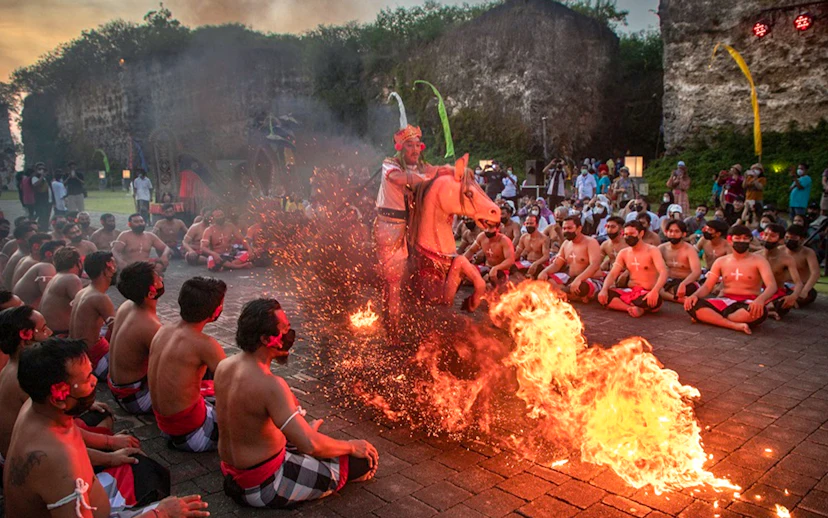
The Balinese magic of Barong and Kecak comes alive at GWK’s only nighttime cultural spectacle.
- Everything you get: Enter GWK at Night for the Baraong Show! Watch Barong battle Rangda through dynamic dance, gamelan music, and vivid costumes, set against the glowing statue.
- Why choose this: Enjoy hassle-free entry to witness the 121m Garuda Wisnu Kencana at night and a gripping performance that brings Balinese mythology to life with stunning theatrics.
- Upgrades: Enhance your night with a 3-course dinner featuring Bebek Mekuah and banana fritter, or a snack platter with chicken Karaage and brulee bomb.
Inclusions #
Entry to GWK at Night: Baraong Show
3-course dinner (menu [here](
https://cdn-imgix.headout.com/media/pdfs/80df81291f11d05cc7ed24a7efb8e512-Screenshot%202025-02-25%20022803.pdf))(based on option selected)
- Snack platter (menu here) (based on option selected)
- Seating is unreserved and follows a first-come, first-served policy.
- If you’ve opted for a dinner or snack bundle, be sure to redeem it before 8:30pm WITA, as the cashier closes afterward.
- These tickets can't be cancelled or rescheduled.
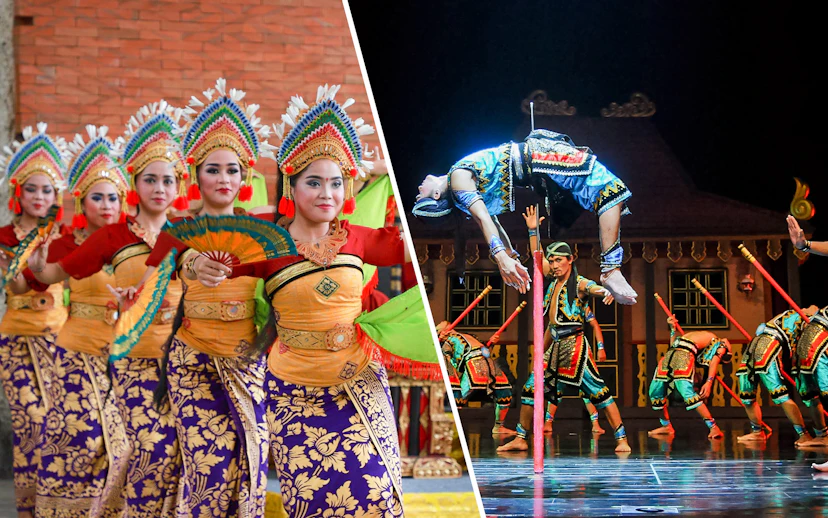
Combo (Save 28%) (Save 5%): Garuda Wisnu Kencana Culture Park + Devdan Show Tickets
GWK Culture Park
- Tip: Consider visiting nearby attractions like Uluwatu Temple or Padang Padang Beach. They’re just a short drive away and offer more of Bali’s breathtaking beauty.
Devdan Show
- Tip: One of the coolest segments features Indonesia’s famous shadow puppets (Wayang Kulit). Watch as light and shadow create an ancient form of storytelling right before your eyes.
- This experience is wheelchair and pram/stroller accessible.
- Video recorders are only allowed on several scenes. The production will announce which scenes are allowed for recording during the show. Please follow these instructions strictly.
- Keep in mind food & beverages are not allowed on this experience. Pack wisely!
Inclusions #
GWK Culture Park
Entry to GWK Cultural Park
Access to 15 cultural performances
Access to Garuda Cilik animation movie
Drink at Jendela Bali restaurant
Devdan Show
Entry to Devdan Show
Category B/C seats (as per option selected)
- These tickets can't be cancelled or rescheduled.
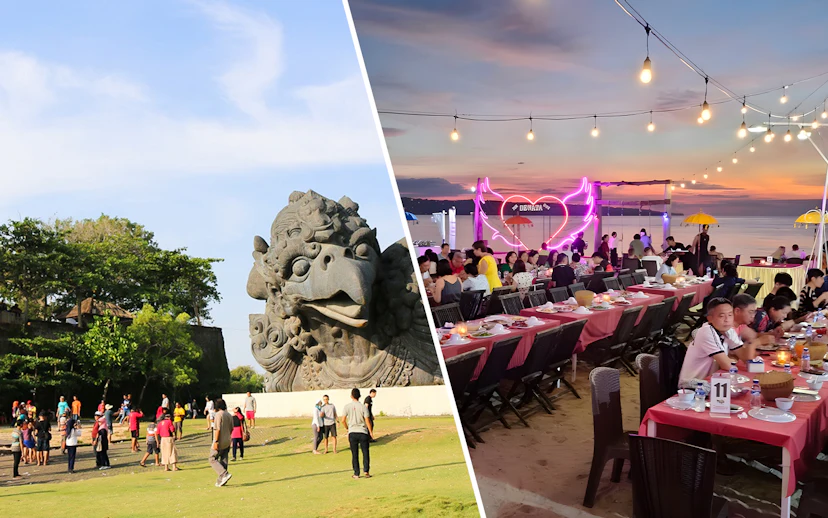
Combo (Save 16%): Garuda Wisnu Kencana Culture Park Tickets + Jimbaran Bali Seafood Dinner at New Dewata Cafe
GWK Culture Park
- Tip: Try traditional Balinese dishes at the food stalls or sit-down restaurants within the park. Don’t miss the satay and nasi goreng!
Jimbaran Bay Seafood Dinner
- Tip: Keep your eyes peeled for spontaneous dance performances on the beach! Sometimes, locals join in for celebrations that you won’t want to miss.
- Click here to see menu for different packages.
Inclusions #
GWK Culture Park
Entry to GWK Cultural Park
Access to 15 cultural performances
Access to Garuda Cilik animation movie
Drink at Jendela Bali restaurant
Jimbaran Bay Seafood Dinner
3-course dinner (menu here)
New Dewata Package 5/Package 6/Package A/Package B (as per option selected)
1 set menu per person
*
- Bottled water
- These tickets can't be cancelled or rescheduled.
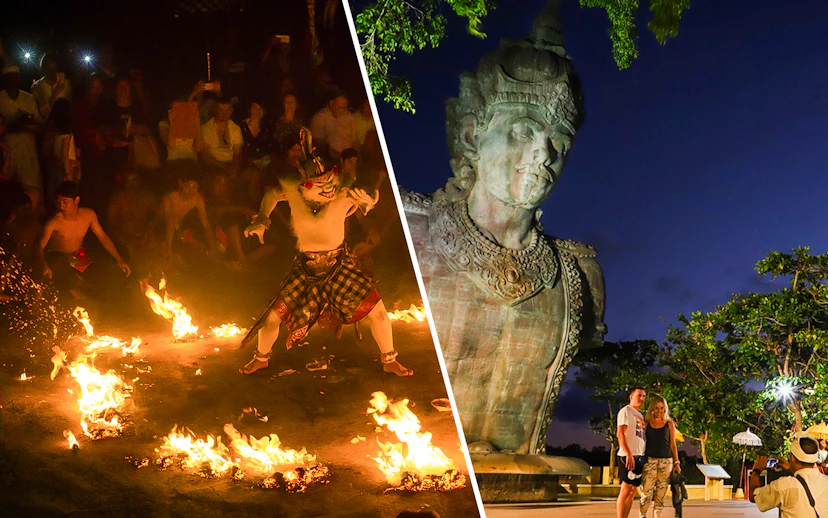
Garuda Wisnu Kencana Culture Park Tickets + Kecak & Fire Dance Show
Perfect for culture enthusiasts, families, and travel photographers who want to get a taste of Bali's traditions without overspending.
- Super saver combo: See the vibrant Kecak dance beside the Uluwatu Temple, admire the statue of Vishnu and Garuda, and wear Balinese costumes with this super saver combo ticket.
- A performance like no other, the Kecak dance is a wondrous portrayal of Balinese culture. Take a seat as a troupe of 75 dancers breathes life into the ancient Hindu epic, the Ramayana.
- As the sun sets, the show kicks off! Hanuman's flowing garments and Rahwana's regal attire shine, with crowns and headpieces adorned in flowers, feathers, and intricate metalwork.
- The 122-meter statue of Garuda-Wisnu is a testament to Bali's rich spiritual legacy and crowns the GWK Cultural Park, overlooking the Indian Ocean.
- Balinese makeover: Feel like royalty in chic Balinese ensembles, Javanese attire, or Payas Alit at Asana Artseum. Choose from Regular, Premium, or Royal Harmony tickets.
Inclusions #
GWK Culture Park
Entry to GWK Cultural Park
Access to 15 cultural performances
Access to Garuda Cilik animation movie
Drink at Jendela Bali restaurant
1 set Balinese/Javanese/ Payas Alit costume (as per option selected)
1/3/5 high-quality edited photos (as per option selected)
Accessories & hair styling for women (as per option selected)
Special background setting (as per option selected)
Uluwatu Kecak & Fire Dance Show
- Access to Uluwatu Kecak & Fire Dance Show
GWK Culture Park
- Tip: Use your camera or smartphone to create time-lapse videos of the sunset or the Kecak dance performance—these make for stunning memories!
Uluwatu Kecak & Fire Dance Show
- Tip: After the show, take a leisurely walk around the temple grounds while the ambiance is still lively, and the sun sets over the ocean.
- Strict dress code: Clothes revealing the shoulders, underarms, back, and knees are not allowed on this tour. Guests can bring a scarf to cover up if needed.
- Complimentary hotel pick-up and drop-off are available for guests staying in Ubud, Sanur, Kuta, Nusa Dua, Jimbaran, Seminyak, and Canggu areas.
- Visitors with back and cardiac issues and other serious medical conditions are restricted from participating in this experience.
- These tickets can't be cancelled or rescheduled.
Which Garuda Wisnu Kencana ticket is best for you
| Ticket type | What's included | Best for | Price |
|---|---|---|---|
Garuda Wisnu Kencana Cultural Park ticket | Entry to GWK Cultural Park, live Balinese performances, Garuda Sineloka Mini Theater access, and a refreshment drink | Exploring the cultural park at your own pace while watching performances and visiting the main plazas and viewpoints | From Rp145,000 |
GWK ticket with Asana Artseum or costume photoshoot upgrade | Standard park entry plus immersive gallery access or Balinese costume experience with styled photos | Spending longer inside the park with interactive cultural activities beyond the main sightseeing route | From Rp145,000 |
GWK at Night: Baraong Show | Evening entry to GWK with the nighttime Baraong performance and optional dinner or snack upgrades | A shorter night visit focused on Balinese mythology, live dance, and seeing the illuminated statue after dark | From Rp89,000 |
Combo: GWK + Devdan Show | GWK Cultural Park access plus entry to the Devdan cultural performance | Building a culture-focused Bali itinerary with multiple traditional and theatrical performances | From Rp337,500 |
Combo: GWK + Jimbaran seafood dinner | GWK entry paired with a seafood dining experience at New Dewata Cafe | Combining cultural sightseeing with a slower sunset dinner by the beach | From Rp263,500 |
Combo: GWK + Uluwatu Kecak & Fire Dance Show | GWK access, Balinese costume photoshoot, and Uluwatu Kecak performance | Covering Bali’s best-known cultural performances and photo experiences across the same trip | From Rp292,500 |
How do you get around Garuda Wisnu Kencana?
Layout and route
Maps and navigation tools
What is Garuda Wisnu Kencana worth visiting for?