Plan your visit to Bali Bird Park
Bali Bird Park is a compact wildlife park best known for its walk-in aviaries, rare Indonesian bird species, and hands-on feeding sessions. Even though it covers only about 2 hectares, it rewards planning more than people expect because the best moments happen on a schedule — birds-of-prey flights, pelican feeding, and lory feeding can easily slip past if you wander aimlessly. The biggest difference between a rushed visit and a great one is timing your route around the shows. This guide helps you plan entry, pacing, tickets, and the highlights worth slowing down for.
Quick overview: Bali Bird Park at a glance
If you want a relaxed half-day wildlife stop in Bali, this is one of the easier attractions to plan well — as long as you build your visit around the feeding and show times.
- When to visit: Daily, 9am–5:30pm. 9am–10:30am feels noticeably calmer than 11am–2pm, and the birds are more active before the midday heat and tour groups build up.
- Getting in: From IDR 385,000 for standard entry. Private guided experiences and combo tickets cost more. Booking ahead matters most in July–August and late December, when short-notice family bookings pile up.
- How long to allow: 2–3 hours works for most visitors. It stretches closer to 4 hours if you add the Reptile Park, lunch, or wait for multiple shows.
- What most people miss: The Bali Starling breeding area and the owl and photo-interaction corners are easy to skip if you rush between the big aviaries and show arena.
- Is a guide worth it? A guide adds value if you want conservation context and help timing the schedule, but most visitors can do the park well on their own with the show board and a clear route.
Jump to what you need
🕒 Where and when to go
🗓️ How much time do you need?
🎟️ Which ticket is right for you?
🗺️ Getting around
🦜 Which birds to prioritize
♿ Facilities and accessibility
Where and when to go
How do you get to Bali Bird Park?
Bali Bird Park is in Singapadu, Gianyar, between south Bali’s resort areas and Ubud, making it one of the easier wildlife stops to slot into a half-day plan.
- Private car / driver: Direct drop-off at the main gate → easiest option from most Bali hotels → best for families and anyone pairing it with Ubud.
- Taxi / rideshare: Drop-off at the entrance plaza → minimal walk → book your return in advance because the area is less central than Seminyak or Ubud.
- Tour shuttle / day trip transfer: Common on Ubud and Gianyar wildlife itineraries → saves planning time → useful if you don’t want to coordinate transport yourself.
- Parking: Free on-site parking for cars and buses → convenient if you’re self-driving → usually simplest before 11am.
Getting here from nearby cities
Bali Bird Park works well from several Bali bases, but it’s especially easy from Ubud and south Bali resorts.
From Ubud
- Distance: 12km
- Travel time: About 20 min by car
- Time to budget: Leaves plenty of time for a same-day Ubud market, temple, or rice terrace stop
From Kuta or Denpasar
- Distance: About 20km
- Travel time: 45 min by car, traffic dependent
- Time to budget: Best as a morning stop before the roads and the park both get busier
Which entrance should you use?
There’s one main entrance, and the biggest mistake is arriving without checking the day’s show board right after entry — that’s what usually causes missed feedings and backtracking.
- Main entrance: Located at the front gate beside the shared Bali Bird Park complex entrance. Expect 5–15 min waits during late morning in July, August, and holiday periods.
When is Bali Bird Park open?
- Monday–Sunday: 9am–5:30pm
- Last entry: 5pm
- Show note: Key live sessions run through the day, including pelican feeding and the birds-of-prey free-flight show
When is it busiest? Late mornings, school holidays, July–August, and the last 2 weeks of December feel busiest, when family groups and short-notice visitors bunch around the same show times.
When should you actually go? Aim for opening time if you want cooler paths, more active birds in the aviaries, and enough breathing room to catch the first round of feedings without rushing.
How much time do you need?
| Visit type | Route | Duration | Walking distance | What you get |
|---|---|---|---|---|
Highlights only | Entrance → Papua aviary → Bali Starling area → 1 live show or feeding → exit | 1.5–2 hrs | ~1.5km | Covers the signature aviaries and one scheduled experience, but you’ll skip slower corners like the owl house, photo spots, and any add-on reptile visit. |
Balanced visit | Entrance → Papua aviary → Indonesian habitats → Bali Starling area → pelican or lory feeding → birds-of-prey show → Komodo dragon → exit | 2.5–3 hrs | ~2km | This is the sweet spot for most visitors because you get the core habitats, at least 2 timed experiences, and enough time to stop for photos without feeling rushed. |
Full exploration | Full bird park loop → all major aviaries → Bali Starling center → 2–3 shows/feedings → Komodo dragon → Reptile Park add-on → lunch or 4D theater → exit | 3.5–4.5 hrs | ~2.5km | Adds the reptile exhibits, more keeper-led moments, and time to linger where the birds are most active, but it only makes sense if you pace yourself around the show board and midday heat. |
Which Bali Bird Park ticket is best for you
| Ticket type | What's included | Best for | Price range |
|---|---|---|---|
Bali Bird Park admission | Entry to all seven bird habitats, feeding sessions, live shows, 4D cinema, and Komodo Dragon exhibit | A flexible half-day wildlife visit focused on birds, shows, and interactive feeding experiences | From Rp112,000 |
Bali Bird Park Group Saver | Standard park access for groups of 3 or more | Families or friend groups visiting together and looking for better per-person pricing | From Rp133,000 |
Bali Bird Park + Lunch with Bird Stars | Park admission plus a set-menu lunch with exotic birds, dessert, and iced tea | A slower visit where you want a meal experience built into the park day instead of leaving midday | From Rp235,000 |
Combo: Bali Bird Park + Bali Reptile Park | Entry to both neighboring parks with access to bird habitats, reptile exhibits, shows, and feeding sessions | Turning the visit into a broader wildlife day instead of focusing only on birds | From Rp238,026 |
How do you get around Bali Bird Park?
How do you get around Bali Bird Park?
Bali Bird Park is laid out more like a compact loop of themed habitats than a large zoo, so you can cover the highlights in about 2 hours and the full visit in 3–4 hours. The one thing that changes the flow most is the show schedule — if you ignore it, you’ll end up doubling back.
- Papua rainforest aviary: Birds-of-paradise, crowned pigeons, and dense jungle planting → budget 25–30 min.
- Indonesian archipelago habitats: Hornbills, parrots, doves, and tropical landscaping → budget 20–25 min.
- Bali Starling center: Conservation breeding area for the park’s flagship endangered species → budget 10–15 min.
- Interactive corners: Lory feeding, photo stops, and owl encounters → budget 20–30 min depending on queues.
- Komodo and reptile area: Komodo dragon viewing and nearby reptile exhibits → budget 15–25 min.
Suggested route: Start with the big aviaries first while the birds are most active, then work toward the scheduled feedings and flight show, and leave the photo corners and 4D theater for later when the sun is strongest.
Maps and navigation tools
- Map: On-site park maps and schedule boards cover the habitats and show times → grab one near the entrance before you start walking.
- Signage: Wayfinding is decent for the paths, but you still need the show board because timed feedings are what most visitors miss.
- Audio guide / app: The visit relies more on keeper talks, plaques, and show commentary than on a full audioguide, so self-guided works well if you like moving at your own pace.
💡 Pro tip: Build your route around the first show or feeding you care about most — the park is small enough to walk easily, but missing one timed session is what usually makes the visit feel rushed.
Which animals and habitats should you prioritize?

Papua rainforest aviary
Habitat: Papuan rainforest
This is one of the most immersive parts of the park, with thick planting, free-flying birds, and some of the most visually striking species on site. It’s the best place to slow down early in the day, when the birds are more active and the light is gentler for photos. What many visitors miss is looking up — the most dramatic movement often happens in the upper canopy, not at eye level.
Where to find it: Near the main aviary loop in the park’s rainforest habitat zone
Bali Starling breeding center
Species: Bali Starling
This is the most important conservation stop in the park, not just another pretty aviary. The Bali Starling is critically endangered in the wild, and this section explains why the breeding program matters as much as the display itself. Many visitors pass it too quickly because it feels quieter than the larger aviaries, but it’s one of the few places you’ll reliably see this species up close.
Where to find it: In the conservation-focused aviary section along the main walking route
Lory feeding at the canopy walk
Experience type: Interactive feeding session
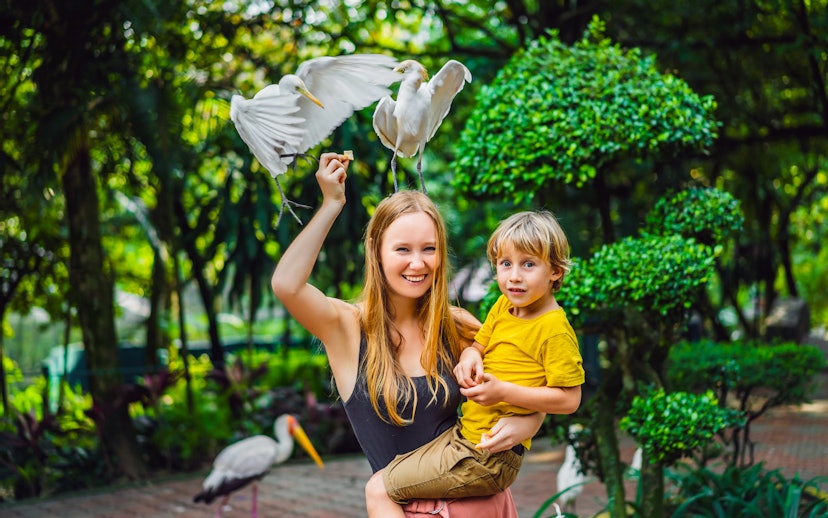
If you want the most hands-on moment in the park, this is it. During feeding time, rainbow lorikeets land on arms and shoulders, which makes it especially good for families and photographers. The detail people miss is that timing matters more than line length here — if you arrive between sessions, the platform feels far less lively.
Where to find it: At the elevated canopy walk feeding platform
Komodo dragon enclosure
Species: Komodo dragon
This is the park’s standout non-bird detour, and it gives the visit more variety than many people expect. Seeing a Komodo dragon this close without traveling to Komodo Island is a genuine draw, especially if you’re already interested in Indonesian wildlife beyond birds. What people miss is that it works best as a later stop, once you’ve finished the aviaries and don’t have to rush back for a show.
Where to find it: In the reptile section beside the main bird park route
Birds-of-prey free-flight show
Experience type: Live show
This is the best scheduled event to build your day around because it turns a simple walk-through into a much fuller visit. Eagles, owls, and other raptors fly overhead, and the commentary helps connect the park’s entertainment side with its education mission. What visitors often underestimate is how central this show is — miss it, and the day can feel lighter than expected.
Where to find it: At the park’s outdoor show arena
Guyu-Guyu photo corner
Experience type: Supervised bird interaction
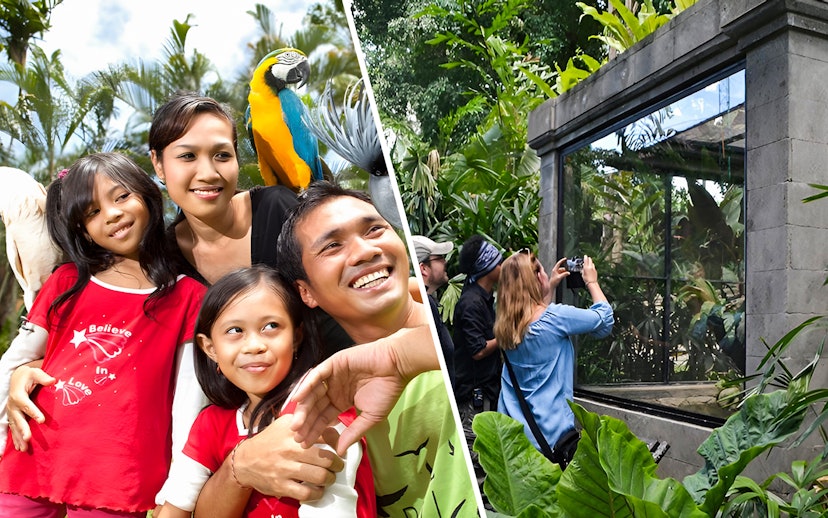
This is where the park leans into memorable, personal encounters rather than pure exhibit viewing. Friendly parrots or cockatoos are brought close for photos, and it’s often a favorite stop for families and couples. Many people skip it because it looks like a quick photo stop, but it’s one of the few places where you leave with a real interaction, not just a picture from behind a barrier.
Where to find it: Along the main visitor route near the interactive encounter area
Facilities and accessibility
- 🎒 Bag storage: Large formal storage isn’t the main draw here, so it’s easiest to visit with a small daypack you can comfortably carry through the aviaries.
- 🚻 Restrooms: Clean restrooms are available on-site, and at least 1 restroom is designed to be wheelchair accessible.
- 🍽️ Cafés and restaurant: The park has an open-air restaurant and café options, which are useful for a midday break when the heat is strongest and you don’t want to leave the complex.
- 🛍️ Gift shop: There’s an on-site souvenir shop selling bird-themed keepsakes and easy Bali gifts, making it a practical final stop before you exit.
- 🪑 Seating / rest areas: Benches are spread around the gardens and shaded paths, which helps if you want to pause between aviaries or while waiting for show times.
- 🅿️ Parking: Parking is free on-site, and the lot is straightforward for both private cars and tour buses.
- 🕌 Prayer room: A prayer room is available, which makes the park easier to visit for Muslim travelers planning a longer half-day outing.
- ♿ Mobility: Most visitor paths are flat and paved, making the park generally wheelchair- and stroller-friendly, though some interactive areas can feel tighter when crowds build before shows.
- 👁️ Visual impairments: The visit is strongest for guests using audio from live commentary and staff explanations, because tactile or specialist visual-access tools are not a major feature of the standard route.
- 🧠 Cognitive and sensory needs: Early morning is the easiest low-stress window, while the show arena, lory feeding platform, and busy photo corners are usually the loudest and most stimulating spots.
- 👨👩👧 Families and strollers: The compact layout works well for strollers end to end, and the short walking distances make it easier than larger Bali wildlife parks if you’re managing naps, snacks, or younger children.
Bali Bird Park is one of the easier Bali wildlife attractions to do with children because it mixes movement, short shows, and safe close-up encounters in a compact space.
- 🕐 Time: Around 2 hours is realistic with younger children, especially if you prioritize the main aviaries, 1 feeding session, and 1 live show.
- 🏠 Facilities: On-site restrooms, shaded seating, food options, and stroller-friendly paths make this more manageable than a larger full-day safari park.
- 💡 Engagement: Time your route so your first big stop is an interactive session like lory feeding, because that usually hooks children faster than a slow exhibit walk.
- 🎒 Logistics: Bring sun protection, water, and a small bag rather than a bulky backpack, and aim for opening time before the heat and crowds build.
- 📍 After your visit: Bali Zoo is only about 2km away, so it’s the easiest nearby add-on if your child still has energy for more animal time.
Rules and restrictions
What you need to know before you go
- Entry requirement: Standard entry is ticketed, and locally priced tickets require Indonesian ID at entry.
- Bag policy: A small daypack is easiest because the park is compact and most visitors move through aviaries, feeding areas, and show spaces without stopping for formal storage.
- Re-entry policy: Plan the visit as 1 continuous loop so you don’t miss timed feedings and shows by stepping out at the wrong moment.
Not allowed
- 🚫 Food and drink: Outside food is best treated as limited because the park has on-site dining and interactive animal areas where loose food can create problems.
- 🐾 Pets: Personal pets should not be brought into the park because of the close animal environment and controlled wildlife habitats.
- 🖐️ Feeding animals: Feed birds only during supervised feeding sessions, because the park’s routines are designed around species-specific diets and safe handling.
- 🖐️ Chasing or startling animals: Do not tap enclosures, chase birds, or crowd the reptiles, because many of the best experiences here depend on the animals staying calm.
Photography
Personal photography is part of the experience, and there is no separate camera fee for using your own phone or camera. Photo rules are easiest to follow if you treat them as area-based rather than universal: open aviaries and outdoor habitats are the most relaxed, while close interaction corners and darker indoor spaces work better without aggressive flash. Tripods and bulky setups are best avoided unless you’ve arranged a dedicated photography experience.
Good to know
- Show timing: The park feels much richer if you enter with a plan for the day’s live schedule, because the aviaries alone don’t deliver the full experience.
- Combo confusion: The Reptile Park is an add-on, so don’t assume it’s automatically included in every standard ticket.
Practical tips
- Booking and arrival: Book at least 1–3 days ahead in July–August and late December, because this is a classic short-notice family attraction and the most popular morning arrivals get snapped up first.
- Pacing: Start with the largest aviaries and save the photo corners, café break, and 4D theater for later, because the birds are more active early while the quieter extras still work well in midday heat.
- Crowd management: The best window is usually right at opening, not just because it’s cooler, but because you can see the habitats before the first big wave of visitors starts clustering around the show spaces.
- What to bring or leave behind: Bring a hat, water, and a small bag; this is an easy walk, but it’s still an outdoor tropical park and bulky bags become annoying fast once you start stopping for feedings and photos.
- Food and drink: If you’re staying for 3 hours or more, eat on-site rather than leaving, because the park’s live schedule is what gives the visit structure and stepping out can break your timing.
- Route planning: If the birds-of-prey show matters to you, anchor your whole visit around it first and fill the rest of the route around that slot rather than wandering and hoping to catch it.
What else is worth visiting nearby?
Commonly paired: Bali Reptile Park
Distance: On-site — 1-min walk
Why people combine them: It’s the simplest add-on because the reptile exhibits sit in the same complex, so you can turn a short bird park stop into a fuller half-day without extra transport.
✨ Bali Bird Park and Bali Reptile Park are most commonly visited together — and simplest to do on a combo ticket. The combo saves you the hassle of paying separately once you’re already inside the complex.
Commonly paired: Bali Zoo
Distance: 2km — about 5–10 min by car
Why people combine them: They’re close enough to do in 1 wildlife-focused day, and the pairing gives you a much broader mix of birds, reptiles, and larger mammals than either attraction alone.
Also nearby
Ubud
Distance: 12km — about 20 min by car
Worth knowing: It’s the easiest next stop if you want to turn the park into a broader day of cafés, markets, temples, and rice-field views.
Tegenungan Waterfall
Distance: Short drive from Gianyar — easiest by car after the park
Worth knowing: This works best if you want a cooler, scenic stop after a morning wildlife visit, though it’s a very different pace from the park’s controlled layout.
Eat, shop and stay near Bali Bird Park
- On-site: The park’s open-air restaurant and cafés are the most practical choice for a midday meal, especially if you’re timing your day around the feedings and live shows rather than leaving the complex.
- Central Ubud cafés: About 20 min by car from central Ubud; better if you’re heading north after your visit and want more variety than an attraction café can offer.
- Batubulan local warungs: A short drive in the Batubulan area; useful for a quicker and cheaper post-visit stop if you’re driving back toward south Bali.
- South Bali resort dining: On the return leg toward Sanur, Kuta, or Seminyak; best if the park is only your morning stop and you’d rather save your main meal for later.
- 💡 Pro tip: Eat either before you enter or after your second major show — sitting down too early is the easiest way to break the rhythm of a 2–3 hour visit.
- Bali Bird Park gift shop: Bird-themed souvenirs, easy family gifts, and park keepsakes right by the exit.
- Batubulan craft villages: Balinese carvings, textiles, and handicrafts; a better stop if you want something more local than standard attraction merchandise.
The area around Bali Bird Park is practical rather than atmospheric. It works if your main goal is a low-logistics wildlife day in Gianyar, but it’s not the best Bali base if you want evening walkability, dining variety, or a strong neighborhood feel. Most visitors are better off staying in Ubud or south Bali and visiting the park by car.
- Price point: The immediate area is more functional and lower-key than resort zones, with simpler stays rather than destination hotels.
- Best for: Travelers with a private driver, families doing multiple Gianyar attractions in 1 day, and anyone prioritizing convenience over nightlife or scenery.
- Consider instead: Ubud if you want cafés, markets, and a better all-round Bali base, or Sanur if you prefer an easier coastal stay with calmer logistics than Kuta or Seminyak.
Frequently asked questions about visiting Bali Bird Park
Most visits take 2–3 hours. If you add the Reptile Park, lunch, or wait for multiple shows and feedings, it can stretch to 3.5–4.5 hours without feeling forced.
Booking in advance is smart, especially in July–August and late December. Bali Bird Park also attracts a lot of short-notice family bookings, so locking in your preferred morning visit helps you avoid paying more or settling for a less convenient slot.
Arriving 15–20 minutes early is enough for most visits. That gives you time to enter calmly, check the day’s show board, and plan your route before the first feeding or performance you want to catch.
Yes, a small backpack or daypack is fine and is the easiest option for this park. Since the visit is mostly a continuous walk through aviaries and show spaces, lighter is better than carrying a bulky bag in Bali’s heat.
Yes, personal photography is part of the experience and there’s no separate camera fee. Open aviaries and outdoor habitats are the easiest areas for photos, while close interaction zones and darker indoor corners work better if you avoid strong flash.
Yes, the park works well for groups because the paths are easy to follow and the live schedule gives everyone natural meeting points. It’s especially good for family groups, school trips, and private day tours that combine it with other Gianyar or Ubud stops.
Yes, it’s one of the easier wildlife attractions in Bali to do with children. The park is compact, stroller-friendly, and full of short, engaging moments like lory feeding, bird shows, and close-up photo encounters that hold attention better than a long zoo circuit.
Yes, most of the park is accessible thanks to flat, paved paths and a wheelchair-accessible restroom. It’s still best to come early, because interactive corners and show areas can feel tighter once late-morning crowds build.
Yes, food is available on-site through the park’s restaurant and café spaces. That’s usually the easiest choice if you’re staying for 3 hours or more, though Ubud and the Batubulan area give you more variety if you’re eating after your visit.
Not always. Standard admission covers the bird park itself, while the Reptile Park is usually sold as a separate add-on or combo ticket, so it’s worth checking before you book if Komodo dragons are part of your plan.
The birds-of-prey free-flight show is the best one to anchor your visit around. It adds the most structure to the day, and if you miss it, the visit can feel more like a pleasant walk-through than a fully rounded wildlife experience.