Plan your visit to Bali Zoo
Bali Zoo is a compact, interactive wildlife park best known for hands-on animal encounters, Breakfast with Orangutans, and Elephant Mud Fun. It feels easier and more intimate than Bali Safari, but the split, shuttle-linked layout means timing matters more than people expect. A rushed visit can feel small, while a well-planned one feels full. This guide covers the hours, route, tickets, and practical choices that make the difference.
Quick overview: Bali Zoo at a glance
Bali Zoo works best as a half-day or full-day plan, not a last-minute filler stop.
- When to visit: Monday–Sunday, 9am–5pm. Weekday mornings from 9am–10:30am are noticeably calmer than 12:30pm–2pm, because lunch traffic, the shuttle, and the 1pm Animal Encounter all peak together.
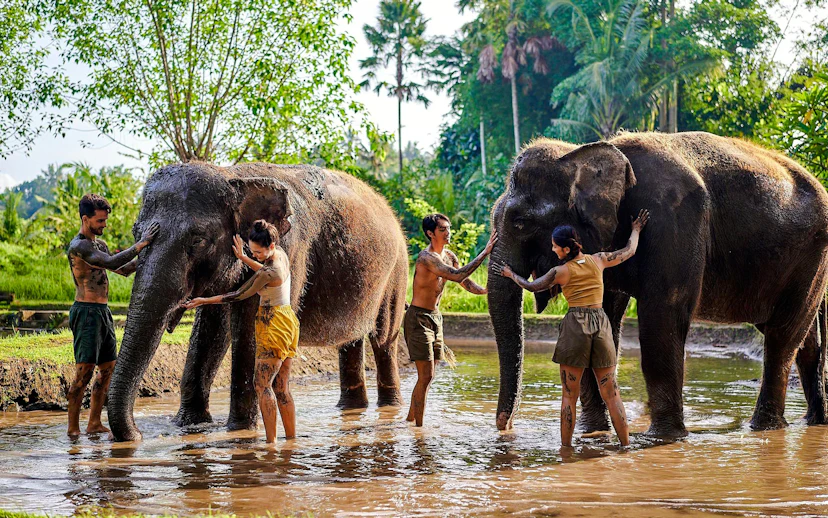
- Getting in: From $24 for standard entry. Breakfast with Orangutans from $40, and Elephant Mud Fun from $79. Book premium experiences 3–7 days ahead in July, August, late December, and holiday weeks, but regular entry rarely needs more than short notice.
- How long to allow: 2–3 hours for most visitors. It pushes toward 5–7 hours if you add Breakfast with Orangutans, Mud Fun, or stay for the 3pm bird show.
- What most people miss: The free shuttle to Kampung Sumatra, the 1pm Animal Encounter with species like pangolin and python, and the rooftop lookout over the newer savanna zone.
- Is a guide worth it? Usually no for a standard zoo loop, but yes for Behind Closed Doors or Mud Fun, where keeper access and fixed timing add more than a self-guided visit can.
🎟️ Breakfast, Mud Fun, and Night at the Zoo slots for Bali Zoo sell out 3–7 days in advance during July, August, Eid week, and late December. Lock in your visit before the time you want is gone. See ticket options
Jump to what you need
🕒 Where and when to go
🗓️ How much time do you need?
🎟️ Which ticket is right for you?
🗺️ Getting around
🦧 Which animals to prioritize
♿ Facilities and accessibility
Where and when to go
How do you get to Bali Zoo?
Bali Zoo is in Singapadu, Sukawati, about 15–25 minutes south of Ubud and much easier to reach from inland Bali than from the beach hubs.
Jl. Raya Singapadu, Singapadu, Kec. Sukawati, Kabupaten Gianyar, Bali 80582, Indonesia
→ Open in Google Maps
- Shuttle / hotel transfer: Bali Zoo transfers run from Ubud, Sanur, Seminyak, Kuta, Canggu, Nusa Dua, and Jimbaran → easiest for breakfast and Mud Fun starts.
- Taxi / rideshare: Drop-off is right at the main entrance → simplest from Ubud, but pre-book your return if coming from the south.
- Private driver / scooter: On-site parking is free for cars and motorbikes → best if you’re pairing the zoo with other Gianyar stops.
Full getting there guide
Getting here from nearby cities
Visitors usually come from Ubud or the southern beach areas, and Ubud is the easiest base if Bali Zoo is a priority stop.
From Ubud
- Distance: 12–15km
- Travel time: 15–25 mins via car, scooter, or rideshare
- Time to budget: Easy half-day; you can still fit lunch or another Gianyar stop after
From Seminyak
- Distance: 22–23km
- Travel time: 45–60 mins via car or transfer
- Time to budget: Better as a planned half-day or full-day outing than a casual morning trip
From Nusa Dua
- Distance: 28–32km
- Travel time: 60–90 mins via car or transfer
- Time to budget: Start early, especially for Mud Fun or breakfast slots
Which entrance should you use?
Bali Zoo keeps things simple: there is one main public entrance, and the bigger mistake is underestimating how long it takes to settle tickets, maps, and the activity board before you start.
- Located at the main Singapadu gate. Expect 5–15 mins wait during regular mornings, and longer on weekends, Eid, and school-holiday dates.
Full entrances guide
When is Bali Zoo open?
- Monday–Sunday: 9am–5pm
- Last entry: 4pm
- Night at the Zoo: 6pm–9pm on operating evenings
- Closed: Nyepi
When is it busiest? Weekends, Indonesian holiday periods, July–August, and 12:30pm–2pm are the busiest windows, when lunch traffic and the 1pm encounter crowd make the park feel much fuller.
When should you actually go? Aim for 9am–10:30am on a weekday, when the paths are shadier, animals are more active, and you can reach Kampung Sumatra before the shuttle and lunch queues build.
💡 Pro tip: If you want the 1pm Animal Encounter, arrive by 12:15pm and eat before noon — lunch lines, shuttle waits, and the encounter queue all stack up at the same time.
How much time do you need?
| Visit type | Route | Duration | Walking distance | What you get |
|---|---|---|---|---|
Highlights only | Entrance deer park → aviary → reptiles → lemur walk-through → shuttle → orangutans → elephants → tigers → exit | 2–2.5 hrs | ~2km | You cover the headline animals on a Bali Zoo Entry Ticket, but you’ll likely skip lunch, Jungle Splash, and most timed talks. |
Balanced visit | Entrance loop → 11am bird show → shuttle → Kampung Sumatra → lunch → 1pm Animal Encounter → savanna zone → exit | 3.5–4.5 hrs | ~3km | This is the best standard-entry route because it adds the live shows, encounter session, and a calmer pace without needing a premium add-on. |
Full exploration | Breakfast with Orangutans or Mud Fun start → full zoo loop → lunch → Animal Encounter or 3pm bird show → savanna → exit | 5–7 hrs | ~4km | This gives you the full-value day, but it only makes sense with Breakfast with Orangutans, Elephant Mud Fun, or a combo ticket, and it’s tiring in the afternoon heat. |
The highlights route works on the Bali Zoo Entry Ticket. Full-day routes need Breakfast with Orangutans, Elephant Mud Fun, or a combo ticket.
✨ The full exploration route is harder without local help because the zoo is split across shuttle-linked zones and the best encounters happen at fixed times. A guided premium experience saves wasted time between the main loop, Kampung Sumatra, and the elephant area.
Which Bali Zoo ticket is best for you
| Ticket type | What's included | Best for | Price range |
|---|---|---|---|
Bali Zoo Entry Ticket | Zoo entry + Jungle Splash + daily animal shows | A flexible 2–3-hour visit where you want the zoo itself without committing to an early start or premium add-on. | From $24 |
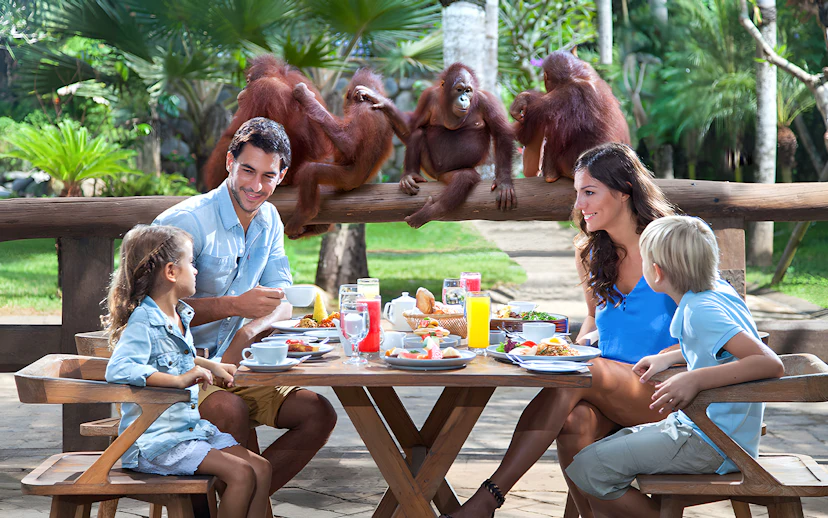
Breakfast with Orangutans at Bali Zoo | Early entry + buffet breakfast + orangutan viewing + zoo entry + Jungle Splash | A quieter morning visit where empty paths and a strong breakfast matter more than packing in every activity. | From $40 |
Elephant Mud Fun Experience | Zoo entry + feeding session + mud activity + river wash + lunch + selected transfers | A half-day animal encounter where you want a hands-on elephant program and are happy to get wet, muddy, and tired. | From $79 |
Behind Closed Doors at Bali Zoo | After-hours access + animal specialist + lion/tiger feeding + snacks + drinks + selected transfers | A smaller-group visit where fewer people and more keeper context matter more than seeing the park at peak daytime hours. | From $45 |
Combo: Bali Zoo Entry Tickets + Breakfast with Orangutans + Elephant Mud Fun | Zoo entry + breakfast + Mud Fun + lunch + bundled savings | A full-day plan where you want Bali Zoo’s headline experiences in one booking and better value than buying them separately. | From $95 |
Night at the Zoo | Evening entry + guided walk + animal encounters + buffet dinner + fire dance + hotel transfers | A cooler evening visit where you prefer a structured program and dinner over daytime walking in the heat. | From $72 |
How do you get around Bali Zoo?
Bali Zoo has 2 main visiting clusters and a free shuttle between them, so it feels larger in practice than the map suggests. The real planning challenge isn’t distance alone — it’s catching the right zone at the right time.
Getting around Bali Zoo
- Main zoo loop → deer park, aviary, reptiles, lemurs, sun bear, and Jungle Splash → budget 60–90 mins.
- Kampung Sumatra → orangutan playground, elephants, tiger trail, and Gayo Restaurant → budget 60–75 mins.
- Savanna side → lions, zebra, ostrich, meerkats, and the newer open habitats → budget 30–45 mins.
Suggested route: Start in the main loop while the paths are cooler, then shuttle to Kampung Sumatra before lunch so you can line up the 1pm Animal Encounter or 1:30pm orangutan activity without doubling back.
Maps and navigation tools
- Map: Printed map + daily activity board → covers zones, shuttle stops, and show times → collect both at the entrance before you walk in.
- Signage: Good enough for the main loop → less helpful for timing the split-zone visit → use the printed map once you decide on the shuttle.
- Audio guide / app: Keeper talks and the activity board add more practical value than a digital guide here → plan around those instead.
- Large outdoor POIs only: The zoo is walkable, but the shuttle saves real time and energy once you’re moving between the main loop and Kampung Sumatra.
💡 Pro tip: Take a photo of the activity board at the entrance — bird show times and the 1pm encounter matter more than the animal list.
Get the Bali Zoo map / audio guide
Which animals and habitats should you prioritize?

Sumatran elephant herd
Species: Sumatran elephant
This is Bali Zoo’s signature animal experience, whether you’re doing Elephant Mud Fun or just watching from the regular visitor area. It’s worth slowing down here because the elephants are one of the zoo’s strongest, most reliable sightings, and the area has more energy than many of the smaller enclosures. Most visitors rush past after a quick photo and miss the keeper-led feeding moments.
Where to find it: Kampung Sumatra, reached by the free shuttle from the main zoo.
Orangutan playground
Species: Bornean orangutan
This is the core stop for Breakfast with Orangutans, but it’s still worth prioritizing on a standard visit because the orangutan setup is more active in the morning than many people expect. What visitors often miss is that the best views are from waiting a few minutes rather than photographing the first platform appearance and moving on. Juvenile activity can also change the whole stop.
Where to find it: Near Gayo Restaurant in Kampung Sumatra.
Free-roaming deer park
Species: Javan rusa and Bawean deer
This is the first section most people walk through, and it sets the tone better than almost anything else in the zoo because the animals are right in your path from the start. Don’t treat it like a quick entrance corridor. Visitors often miss how good this area is for photos before the later crowds arrive and before the fruit baskets sell fastest.
Where to find it: Immediately after the main entrance.
Tiger trail
Species: Sumatran and Bengal tigers
This is one of Bali Zoo’s strongest big-cat stops, and it’s more rewarding than a quick glance through the glass. The detail many people miss is that glare can ruin the view at the wrong angle, so taking a moment to shift position usually helps more than waiting longer. Keeper timing also changes how active the cats feel.
Where to find it: Kampung Sumatra, a short walk from the elephants.
Lemur walk-through
Species: Ring-tailed lemur
This is one of the easiest places in the zoo to feel genuinely inside the habitat rather than just looking in from a rail. It’s worth prioritizing because the encounter feels lighter and more immersive than some of the traditional enclosures. Most visitors move too quickly and miss the eye-level lounging spots where the lemurs tend to settle.
Where to find it: On the main zoo walking loop before the shuttle zone.
Animal Encounter
Encounter type: Daily keeper-led session
This is less about enclosure viewing and more about timing, because it’s one of the few places where you can slow down and focus on species like porcupine, python, and pangolin with staff supervision. The easy-to-miss detail is that it only runs for a short daily window, and plenty of visitors accidentally choose lunch instead.
Where to find it: Central Food Village, usually from 1pm–1:30pm.
💡 Don't leave without seeing: the 1pm Animal Encounter at Central Food Village and the Kampung Sumatra rooftop view — many visitors drift into lunch, miss the timed session, and never take the shuttle far enough to reach the upper lookout.
Facilities and accessibility
- 🎒 Cloakroom / lockers: Lockers are available at Jungle Splash for about IDR 10,000, and they’re most useful if you plan to change after the splash zone or Mud Fun.
- 🚻 Restrooms: Restrooms are spread around the zoo and dining areas, so you usually won’t need to leave the visitor route to find one.
- 🍽️ Restaurants and snack stops: Wana, Gayo, Wantilan, Sanctoo Restaurant, Snack Snacks, and Central Food Village cover buffets, burgers, ribs, snacks, and sit-down meals, but prices are higher than outside warungs and outside food is not allowed.
- 🛍️ Gift shop / merchandise: The main gift shop is near the exit and works best for last-minute souvenirs rather than anything you need mid-visit.
- 🪑 Seating / rest areas: Your best seating options are the restaurants, food courts, and shaded show areas rather than benches scattered evenly across the whole zoo.
- 📶 Wi-Fi: Don’t count on public Wi-Fi for maps or bookings, so download tickets and screenshots before you arrive.
- 🅿️ Parking: Free parking for cars and motorbikes is available near the entrance, which makes private drivers and scooters the easiest self-managed arrival options.
- ♿ Mobility: Bali Zoo is generally wheelchair- and stroller-accessible, but the Elephant Mud Fun area is not, and the split-zone layout means long outdoor sections plus shuttle movement between areas.
- 👁️ Visual impairments: The zoo relies mostly on standard signage, printed maps, and staff help at arrival, so visitors with low vision will likely need assistance navigating the shuttle-linked zones and uneven outdoor paths.
- 🧠 Cognitive and sensory needs: Weekday mornings are the least overstimulating window, while the loudest areas are the bird show, Jungle Splash, and the 1pm Animal Encounter around Central Food Village.
- 👨👩👧 Families and strollers: Strollers work well on the main zoo route and around the dining areas, but the full visit is less smooth if you’re also trying to reach Mud Fun or hurry between timed shows.
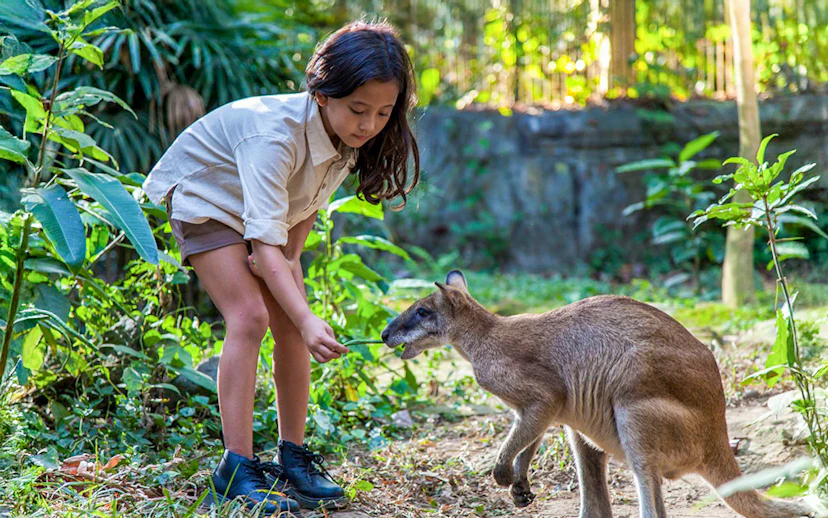
Bali Zoo works well for children because the visit is interactive rather than purely observational, and most families get the most value from the deer park, lemur walk-through, Animal Encounter, and Jungle Splash.
- 🕐 Time: 3–4 hours is realistic with young children, and the best family sequence is deer park first, one show before lunch, then Jungle Splash or the petting area later.
- 🏠 Facilities: Jungle Splash, the petting zoo, pony rides, and multiple casual dining options make this easier with kids than a more formal wildlife park.
- 💡 Engagement: One fruit basket near the entrance goes a long way, because feeding deer early gives younger children something immediate to do before the longer walking sections start.
- 🎒 Logistics: Bring a full change of clothes, a small towel, and a waterproof phone case, and aim to enter around 9am if you want cooler paths and shorter queues.
- 📍 After your visit: Bali Bird Park is only about 5 minutes away by car, so it is the easiest add-on if your children still have energy.
Rules and restrictions
What you need to know before you go
- Entry requirement: Pre-booked mobile tickets are the smoothest option, and premium experiences such as Breakfast with Orangutans and Elephant Mud Fun are best booked ahead.
- Bag policy: Bring a small day bag, because bulky items get annoying on the shuttle and lockers are mainly useful around Jungle Splash rather than every zone.
- Re-entry policy: Treat your visit like a single-entry plan, because leaving for cheaper food or rest breaks can disrupt the day’s timed shows and encounter schedule.
Not allowed
- 🚫 Food and drink: Outside food and drinks are not allowed, so budget for on-site meals or eat before you arrive.
- 🖐️ Animal behavior: Harassing, harming, or trying to force contact with the animals is not allowed, and staff-supervised interactions are the only ones you should treat as hands-on.
Photography
Photography is widely allowed at Bali Zoo, and bringing your own phone or camera is the smartest way to avoid the expensive exit photo packages. Flash should be avoided in animal areas where staff or signage restrict it, and the biggest distinction is not by floor or building but by whether you are in a normal viewing zone or a paid encounter setup with roaming photographers. Tripods and bulky gear are impractical on the walking route and shuttle, even if casual handheld photography is easy.
Good to know
- Elephant Mud Fun has a strict 120 cm minimum height, and there is no babysitting option if one child cannot join.
- Mud Fun is closed every 27th and 28th of the month for pool cleaning, which catches same-day planners out more often than you’d expect.
Practical tips
- Book Breakfast with Orangutans, Elephant Mud Fun, and Night at the Zoo at least 3–7 days ahead in July, August, late December, and holiday weeks, because standard entry stays flexible but the premium slots do not.
- If you’re only doing the regular zoo visit, arrive at 9am and stay in the main loop first, because a lot of visitors head straight for the shuttle and then end up backtracking for the aviary, lemurs, and reptile house later.
- Eat before 12 noon or after 1:30pm if the 1pm Animal Encounter matters to you, since lunch queues at Central Food Village and the encounter crowd peak together.
- Bring a small bag, a waterproof phone case, and a change of clothes, because Mud Fun and Jungle Splash create extra locker and photo-package pressure for underprepared visitors.
- If you’re coming from Seminyak, Canggu, Kuta, or Nusa Dua, sort your return ride before you enter the zoo, because app-based pickup is much less predictable after 4:30pm than the morning trip in.
What else is worth visiting nearby?
Commonly paired: Bali Bird Park
Bali Bird Park
Distance: 2km — 5 mins by car
Why people combine them: It sits almost on the same inland route, so it is the easiest animal-focused double-header if you want a fuller half-day without long transfer time.
Book / Learn more
Commonly paired: Tegenungan Waterfall
Tegenungan Waterfall
Distance: 8km — 15–20 mins by car
Why people combine them: It fits naturally into a Gianyar day out and breaks up the zoo visit with a short scenic stop rather than another ticketed animal attraction.
Book / Learn more
Also nearby
Bali Reptile Park
Distance: 2km — 5 mins by car
Worth knowing: This is the easiest add-on if your group wants more reptiles after Bali Zoo, especially if the Komodo dragons were not visible during your visit.
Celuk Village
Distance: 4km — 10 mins by car
Worth knowing: It is best known for silver workshops and jewelry shopping, so it works better as a post-zoo stop than a competing attraction.
Eat, shop and stay near Bali Zoo
- On-site: Bali Zoo is strongest for convenience rather than bargain dining, with Central Food Village, Wana Restaurant, Gayo Restaurant, Wantilan, Snack Snacks, and Sanctoo Restaurant covering most needs without leaving the grounds.
- Wana Restaurant (inside Bali Zoo, near the lion-view area): Indian, Asian, and Western dishes in a shaded sit-down setting, and the best choice if you want a proper meal without interrupting your visit.
- Gayo Restaurant (inside Kampung Sumatra): Buffet-style dining and the Breakfast with Orangutans venue, so it makes the most sense for early starters already spending time in the far zone.
- Sanctoo Restaurant (next to the Elephant Mud Fun area): Most useful if you are doing Mud Fun and do not want to backtrack across the zoo before lunch.
- Pro tip: Eat before 12 noon or after 1:30pm if you want to catch the 1pm Animal Encounter without juggling lunch queues and shuttle timing.
- Bali Zoo gift shop: Exit-side souvenir stop for standard zoo keepsakes, children’s gifts, and last-minute extras, and easiest to browse on the way out.
- Sukawati Art Market: Better for broader Bali souvenirs than the zoo shop, especially if you want textiles, handicrafts, or less generic gifts after your visit.
- Celuk Village silver workshops: Worth the detour only if you are already exploring Gianyar and want Balinese jewelry rather than quick souvenirs.
Staying right by Bali Zoo only makes sense if you want a very early Breakfast with Orangutans, Elephant Mud Fun, or a low-stress family morning. The Singapadu area is practical, not especially atmospheric, so most visitors are happier staying in Ubud and visiting the zoo as a day trip.
- Price point: The immediate area has fewer walkable choices than Ubud, with Sanctoo Suites & Villas as the standout splurge option.
- Best for: Travelers who want almost no morning logistics, especially for 7:30am breakfast starts or 6:30am Mud Fun pickups.
- Consider instead: Ubud is the better base for most trips, and Sanur works better than the southern beach hubs if you want a quieter coast with easier inland travel.
Frequently asked questions about visiting Bali Zoo
Most visits take 2–3 hours, though premium experiences can push the day to 5–7 hours. A regular zoo loop is manageable in a morning or afternoon, but Breakfast with Orangutans, Elephant Mud Fun, or waiting for the 1pm Animal Encounter and 3pm bird show quickly turns it into a half-day or full-day plan.
You usually only need short notice for standard entry, but premium experiences are best booked 3–7 days ahead in peak weeks. Regular zoo admission rarely sells out, but Breakfast with Orangutans, Mud Fun, and Night at the Zoo have smaller operating capacity and are the products most likely to disappear first in July, August, late December, and holiday periods.
Arrive 15–30 minutes early for regular timed experiences, and earlier if you have breakfast or transfers included. That gives you time for bag check, ticket scanning, and the activity board without losing the start of your program. For Breakfast with Orangutans, late arrival matters more because last seating is earlier than many visitors assume.
Yes, but a small backpack or day bag is the smartest option. Bali Zoo is a walking zoo with a shuttle between zones, so oversized bags get annoying fast. If you plan to use Jungle Splash or Mud Fun, lockers are available around those areas, but it is easier to arrive already packed light.
Yes, personal photography is widely allowed, and bringing your own phone or camera is the best way to avoid expensive photo bundles later. Flash should be avoided anywhere staff or signage restrict it, and the main pricing pressure comes from roaming photographers during animal encounters rather than from normal viewing areas.
Yes, Bali Zoo works well for groups, but you should agree on the schedule before entering. The park looks compact on paper, yet the shuttle, lunch timing, and fixed talks make it easy for groups to split up. Premium experiences such as Mud Fun and Behind Closed Doors also run on tighter timing than a standard zoo loop.
Yes, Bali Zoo is one of the easier Bali wildlife attractions for families, especially with children around 4–12 years old. The deer park, lemur walk-through, petting areas, Animal Encounter, and Jungle Splash give children plenty to do between walks. It is a better fit for younger kids than Bali Safari if you want a shorter, more hands-on day.
Partly, yes — the main zoo is broadly accessible, but not every premium area is. Regular paths and family routes are more manageable than the Elephant Mud Fun section, which is not wheelchair-friendly. The split layout also means you need to factor in shuttle movement, outdoor surfaces, and the effort of a longer visit.
Yes, food is easy to find inside Bali Zoo, and most visitors eat on-site rather than leaving mid-visit. You have multiple restaurants and snack outlets, from buffet-style venues to casual meal stops, but expect higher prices than outside Bali. Outside food and drinks are not allowed, so plan for that before you arrive.
Children must be at least 120 cm tall to join Elephant Mud Fun. That rule is enforced because the activity includes mud, water, and close elephant interaction rather than just observation. It matters for family planning because the program does not come with a babysitting option for children who cannot take part.
No, Bali Zoo ended elephant rides in early 2026. Older reviews and legacy listings can still confuse this point, but the current focus is on feeding, walking, and Mud Fun-style elephant care experiences rather than riding. That makes recent information more important than pre-2026 blog posts or forum replies.