Did you know?
The Garuda Wisnu Kencana statue stands at approximately 121 meters, making it taller than the Statue of Liberty and one of the tallest statues in the world.
It took 28 years to complete the statue, with construction finally finishing in 2018 after starting in 1990.
The statue was designed by renowned Indonesian sculptor Nyoman Nuarta and is made from over 3,000 tons of copper and brass.
Is Garuda Wisnu Kencana worth visiting?
Honey-colored stone, broad ceremonial plazas, and then that immense figure of Wisnu rising above the Bukit hills — GWK feels bigger and stranger in person than it does in photos. You hear gamelan from the performance spaces, catch the wind across the open terraces, and keep recalibrating the statue’s scale as you move closer.
The park was built to give Bali a modern landmark rooted in Hindu mythology: Wisnu riding Garuda, a pairing associated with protection, devotion, and strength. That ambition matters on the ground because GWK is not just a monument base; it was planned as a cultural precinct with stages, plazas, and performances.
The payoff is seeing a living cultural symbol presented at monumental scale, then watching dance and theater bring that symbolism back down to human size. It’s especially worthwhile for first-time Bali travelers who want one stop that feels distinctly Balinese rather than generically scenic.
Skip it if you dislike heat, long open-air walks, or landmarks that are strongest as visual and cultural experiences rather than artifact-heavy museums.
What to see at Garuda Wisnu Kencana?
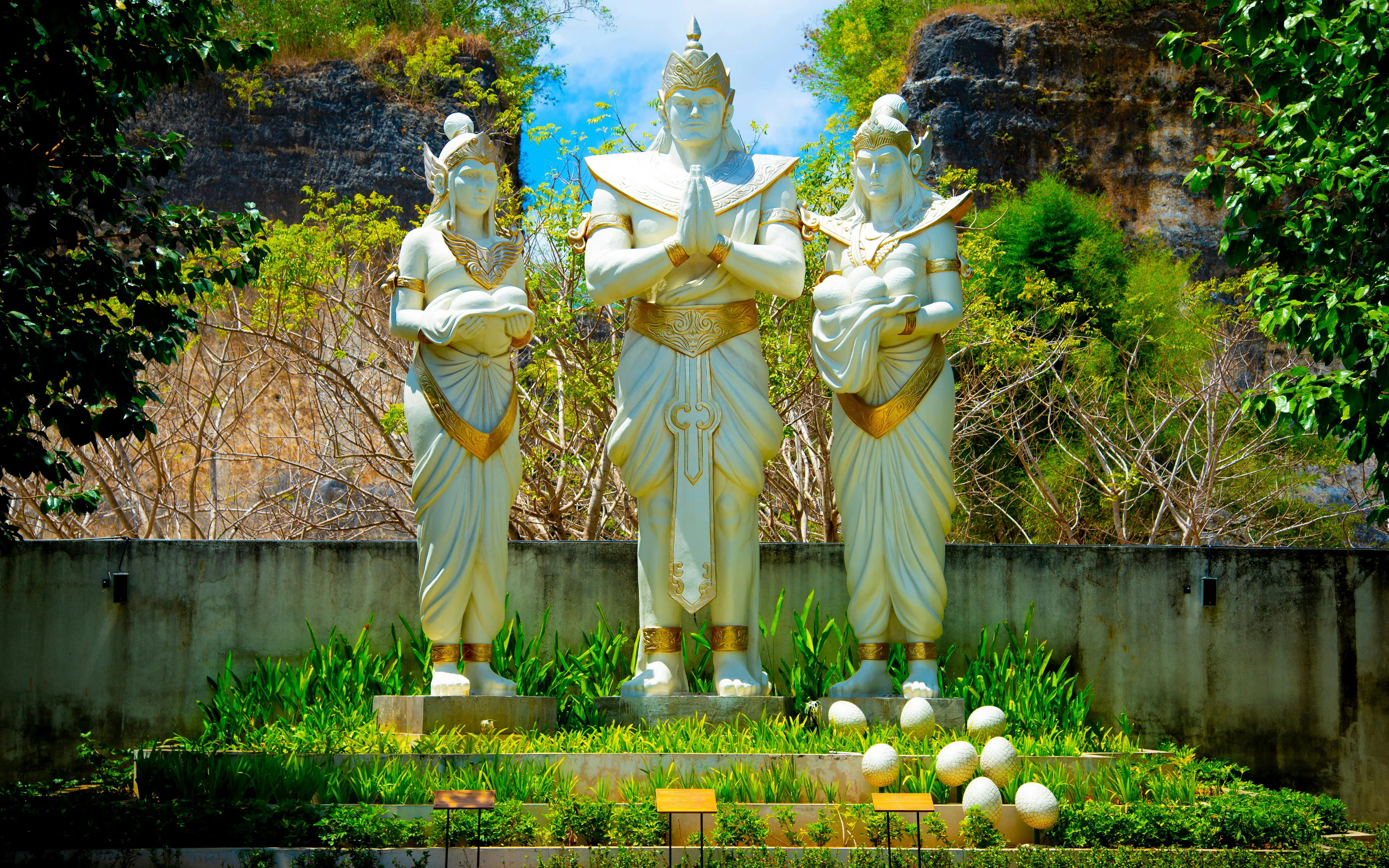
Plaza Bhagawan
This is the practical starting point for most visits: ticket checks, orientation, and your first sense of the park’s scale. If you have any timed add-ons or evening plans, sort them out here before walking deeper in.
Amphitheater
GWK’s daytime cultural shows give the visit rhythm and a reason to pause. Check the performance board early; catching one before the main statue approach breaks up the heat and makes the park feel more than photographic.
Statue of Wisnu and Statue of Garuda
These separate sculptural elements act like a buildup before the full monument reveal. They’re worth a slow look because they let you study the detailing up close before the giant combined figure overwhelms the rest of the site.
The GWK Statue exterior
The park’s central payoff. Stand far enough back to take in the full 121 m form, then walk closer to notice the paneling, feather shapes, and the calm expression of Wisnu above the plaza.
Top of The Statue Tour
The premium inside-the-monument experience, with access to interior levels and views across southern Bali. This is the one feature that changes Garuda Wisnu Kencana Cultural Park from a walk-around landmark into a more interpretive visit, so timed access matters.
Lotus Pond
A vast open event plaza beneath the monument, often used for larger performances and gatherings. Even when nothing major is staged here, it’s one of the best places to feel the park’s unusual scale.
Garuda Sineloka Mini Theater
A useful indoor pause from the sun. The included Petualangan Garuda Cilik screening adds family-friendly context and works well mid-visit, especially if you want a break before heading back into the open park.
How to explore Garuda Wisnu Kencana
How much time to spend?
Budget 2–3 hours for a satisfying first visit. That’s enough for the main statue approach, one or two performances, the mini theater, and a drink stop. Give yourself closer to half a day if you want to linger for late-afternoon light or pair the park with an evening show. Because GWK sits in Ungasan on Bali’s Bukit Peninsula, it works well as a south Bali half-day rather than a rushed stop.
Best visit order
Start at Plaza Bhagawan and check the day’s performance times as soon as you enter. Head first toward the main GWK Statue zone while your energy is fresh, then backfill the Amphitheater, Lotus Pond, and Garuda Sineloka Mini Theater on the return. If your ticket includes extra access, confirm those details before you commit to the longer walk.
Must-see highlights
Must-see: the GWK Statue exterior, one live cultural performance, and the Garuda Sineloka Mini Theater. Optional: the evening Baraong performance or longer plaza wandering, which adds about 60–90 minutes.
Worth adding nearby
Uluwatu Temple, Jimbaran, Melasti Beach, and the south-coast cliff viewpoints all pair naturally with GWK. If you want one ready-made culture route instead of planning separate stops, [Garuda Wisnu Kencana Culture Park Tickets + Kecak & Fire Dance Show] is the best add-on.
Guided or self-paced?
Self-paced is fine for most visitors because the site’s main rewards are visual: scale, views, and performances. If you’re comparing Tiket Masuk Gwk options, start with how much structure you want, not just price. A fuller ticket or combo is worth it if you want a stronger end point than ‘see the statue and leave’; otherwise, standard entry keeps the visit flexible and honest.
Brief history of Garuda Wisnu Kencana
- 1990s: Plans emerge for a monumental cultural park on Bali’s Bukit Peninsula, centered on the Hindu figure of Wisnu riding Garuda.
- 1997: Construction begins on the statue project, conceived as a modern Indonesian landmark with strong Balinese cultural roots.
- Late 1990s–2000s: Work slows dramatically during the Asian financial crisis, and the unfinished monument remains a long-term work in progress.
- 2013: Major construction resumes, with renewed funding and large-scale assembly of the monument’s upper sections.
- 2018: The 121 m statue is completed and inaugurated, becoming one of Indonesia’s tallest monumental landmarks.
- Today: GWK functions as a cultural park with performance venues, plazas, dining, and premium inside-the-statue experiences.
Architecture & design of Garuda Wisnu Kencana
From a distance, GWK reads less like a statue on a pedestal and more like an engineered cliff rising out of Bali’s limestone hills. Up close, the design becomes more interesting: the surfaces are paneled rather than seamless, Garuda’s feathers break into sharp rhythmic folds, and Wisnu’s face is calm enough to keep the whole monument from feeling merely aggressive. The materials matter because you can actually see them working — copper-and-brass cladding, massive structural volume, and a form designed to be legible from far across south Bali. The engineering feat visitors feel most clearly is scale. At 121 m tall, the monument keeps changing proportion as you approach, and the interior levels reveal that this is as much built structure as sculpture.
Who built it?
Designed by Balinese sculptor I Nyoman Nuarta and developed over decades, the monument was backed by the Garuda Wisnu Kencana Foundation and later supported by major public and private investment. The aim was bigger than public art: to create a modern Indonesian landmark rooted in Hindu mythology and visible across the Bukit landscape.
What Wisnu and Garuda represent in Balinese culture
In Balinese Hindu tradition, Wisnu is the preserver — the force associated with balance, protection, and the maintenance of cosmic order. Garuda, his mount, represents loyalty, courage, and devoted service. Together, they form more than a dramatic mythic image; they express a relationship between power and responsibility. That is why the monument lands differently in Bali than a purely decorative statue would. Even for visitors who are not religious, GWK makes most sense when you read it as a contemporary cultural symbol built from beliefs that are still active in daily Balinese life.
Frequently asked questions about Garuda Wisnu Kencana
No. Regular admission covers the park, performances, and theater access, but the interior statue visit is tied to add-on options. If going inside matters to you, choose a ticket that specifically includes the statue tour.
Often, yes, if heat, hills, or limited physical mobility are real concerns. The park is spread out, and the buggy can shorten the approach to the statue, but it is not a full-site shuttle and may not eliminate all walking.
Sometimes, yes. Some tickets allow same-day re-entry if you request a stamp at the exit gate before leaving. It’s worth confirming at the entrance if you plan to leave for a meal or return later in the day.
Light, breathable clothing, comfortable shoes, water, and sun protection are the essentials. GWK is an open-air site with little shade in some stretches, so a hat, sunscreen, and a small umbrella are more useful here than at indoor attractions.
Partly. The park is wheelchair-accessible, but the site is large and open-air, so distance still matters. Plan conservatively, and treat internal transport as limited help rather than guaranteed full-park coverage.

